25 November 2026
Bringing nature indoors: moss wall art room by room
Presented by @natureinplace
Moss wall art has moved beyond a single accent wall. People now use preserved moss in almost every room, and the effect is quietly striking. The material adds color, softens hard surfaces, and introduces a natural rhythm that paint alone cannot match. If you are considering botanical wall decor, the question is not whether to use moss but where it works best and how to make it feel intentional rather than decorative clutter.
Preserved moss is real moss that has been treated to stay soft and green without soil, water, or sunlight. It requires no maintenance beyond an occasional dust flick. That makes it practical for spaces where live plants struggle: a dim hallway, a north-facing living room, or a bathroom with no window. Because it is lightweight, it can be mounted on almost any wall surface without special brackets or reinforcement.
Living room: the natural anchor
The living room is the most common setting for moss wall art, and for good reason. This is where people gather, and a large moss panel can act as a calm visual anchor. It works especially well behind a sofa or above a media console, where it offsets the screens and hard edges of electronics.
Think about scale. A small piece of moss art gets lost on a big wall. A panel that covers two to three feet across reads as a deliberate design element. If the room has neutral tones, moss adds the only green it needs. If the room already has plants, choose a moss panel that echoes the leaf shapes or color temperature of the live foliage. You want harmony, not a botanical competition.
For those who prefer a subtle touch, a narrow vertical strip of moss alongside a mirror or a set of shelves can break up a long wall without dominating the room. The texture alone does the work. You do not need a large area to feel the effect.
Bedroom: quiet and grounding
Bedrooms benefit from the calming quality of natural materials. A moss panel above the headboard creates a soft backdrop that absorbs a little sound and reduces visual noise. It is a good alternative to a painting or a textile wall hanging because it does not collect dust the way fabric does, and it does not demand attention the way a busy print might.
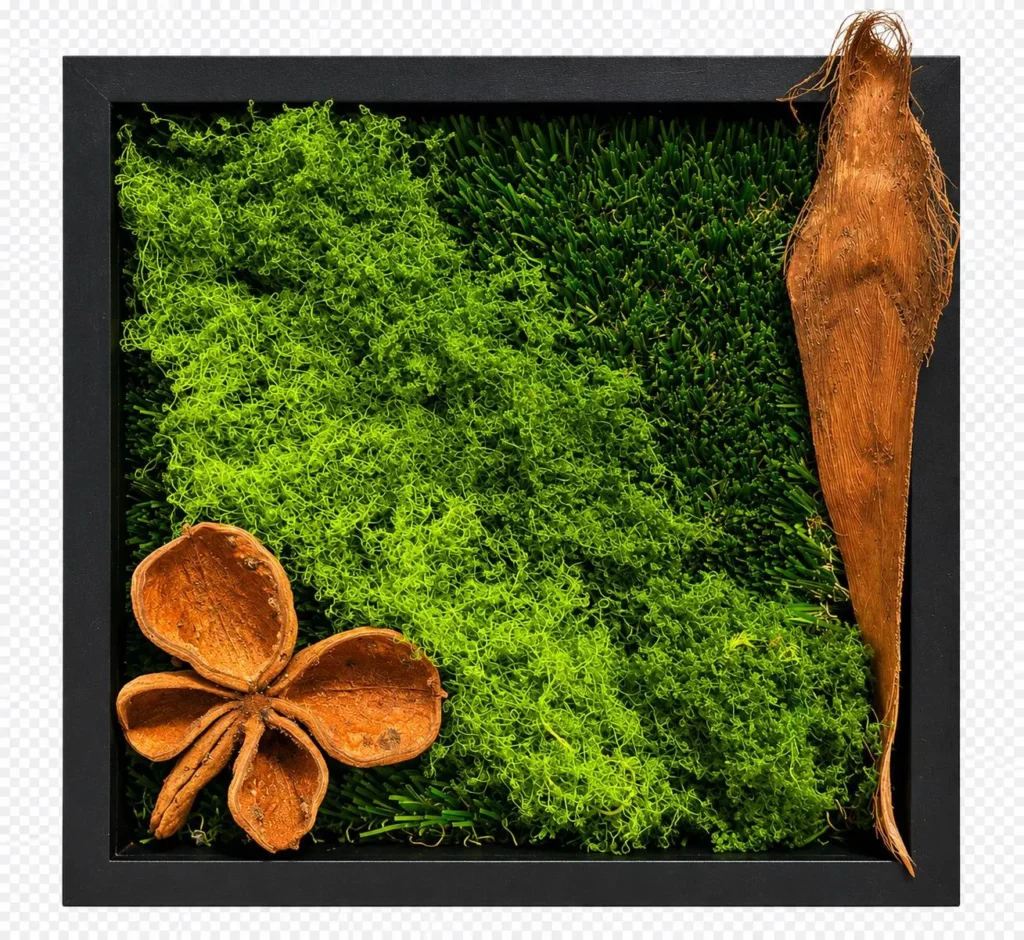
Placement matters. Avoid positioning moss where direct morning or afternoon sun hits it for hours. While preserved moss does not need light, strong sunlight can fade the color over time. A wall opposite a window or beside a shaded corner is ideal. If the bedroom has a reading nook or a dressing area, a small moss panel there can define the zone without adding furniture.
The color palette of the moss should complement the bedding and the wall color. Most preserved moss comes in several shades of green, from deep forest to pale olive. A cool gray-green works with blue or gray tones; a warmer yellow-green suits beige and cream rooms. There is no wrong choice, but the room will feel more cohesive if the moss shares an undertone with the rest of the space.
Home office: focus without glare
Home offices are often clinical or cluttered. A moss accent wall behind the desk can reduce eye strain by giving the eyes a soft surface to rest on during breaks from the screen. The texture also helps with acoustics. A room with hard floors and bare walls echoes; moss absorbs some of that bounce, making phone calls and video meetings sound cleaner.
Consider a layout where the moss panel is behind the monitor but not touching it. Leave a few inches of wall between the screen and the moss so the green does not reflect onto the display. If the office is small, a moss panel above a shelf or a cabinet can add depth without taking floor space. The effect is a room that feels more like a studio and less like a cubicle.
For those who work from home full time, the psychological benefit is real. Looking at a natural surface during the workday lowers stress markers in most people. Moss is not a cure for burnout, but it is a low-effort way to make a workspace feel more human.
Bathroom: resilient and refreshing
Bathrooms are tricky for live plants because of humidity fluctuations and low light. Preserved moss handles both. The humidity in a bathroom actually helps the moss retain its flexibility, though it does not need water. A moss panel above the toilet or beside the mirror can turn a utilitarian room into a spa-like space.
Be careful with placement relative to the shower. While preserved moss is treated to resist mold, direct steam exposure day after day may shorten its life. Install moss at least three feet away from the shower opening, and ensure the bathroom has an exhaust fan or a window to cycle air. A moss panel inside a shower enclosure is not recommended; the constant wetting will break down the preservative treatment.
Small bathrooms benefit from a single vertical strip of moss rather than a large panel. The narrow shape draws the eye upward and makes the ceiling feel higher. If the bathroom has a dark color scheme, a bright green moss strip adds contrast without clashing.
Entryway: first impressions
The entryway sets the tone for the entire home. A moss wall piece here greets guests with warmth and a sense of nature. Because the entryway is often narrow and has little natural light, moss is a practical choice. It does not wilt, and it does not need to be watered when you forget.
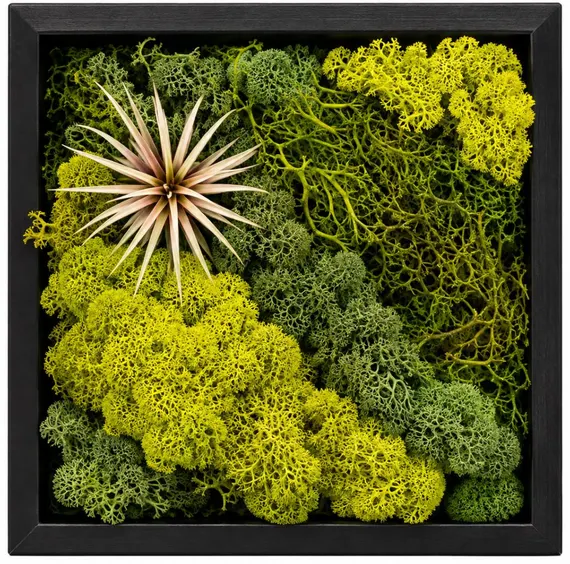
Think about the shape of the wall. A long, narrow hallway calls for a horizontal moss panel or a series of small squares arranged in a grid. A square entry wall can take a single large panel or a circular moss design. The key is to match the proportion of the artwork to the wall. A tiny piece in a big foyer looks like an afterthought; an oversized piece in a cramped hallway feels oppressive.
If the entryway has a console table or a bench, consider placing the moss art above it and leaving the table surface clear. The contrast between the organic moss and the clean line of the furniture is very effective. Add a simple LED strip behind the moss to cast a soft glow at night; the light brings out the depth of the texture.
Kitchen: unexpected and lively
Kitchens are not the first room people think of for moss wall art, but they work well. A moss panel on a blank wall between upper cabinets and the counter can break up the monotony of tile and stainless steel. Place it away from the stove and sink to avoid grease splatter and moisture. A spot near the breakfast nook or the coffee station is ideal.
Moss in the kitchen should be small and intentional. A single panel about the size of a cutting board reads as a decorative detail rather than an experiment. Avoid placing moss near the dishwashing area or the trash bin; those spots get splashed and bumped. If the kitchen has open shelving, a small moss piece on the wall above the shelves ties the display together.
The color of the moss matters more in the kitchen because the room already has many surfaces. A muted green that picks up the tone of the cabinetry or the backsplash works better than a bright green that fights with the countertop. The goal is a gentle note of nature, not a focal point that distracts from cooking.
Hallways and stairwells: continuous rhythm
Long hallways and stairwells are often overlooked in decorating. They become transitional spaces that feel empty. Moss wall art can turn a hallway into a gallery of texture. A series of small moss panels spaced evenly along the wall creates a rhythm that guides the eye from one end to the other. The effect is especially pleasing in a stairwell where each landing can host a different shape or size.
Because these areas get less traffic and less light, moss is a low-maintenance option. It does not fade in dim light the way a poster or a photograph might. And because it has no glass frame, there is no glare from overhead lights. The texture stays visible from every angle.
When installing multiple pieces, keep the spacing consistent. Twelve inches between panels is a common rule of thumb, but the exact distance depends on the size of the panels and the wall length. Lay the pieces on the floor first to test the arrangement before committing to holes. For preserved moss, you can use command strips or small nails; the panels are light enough that heavy brackets are unnecessary.
Making it work in any room
Preserved moss wall art is versatile, but it is not a magic solution. The same principles apply in every room: consider the scale, the light exposure, the color palette, and the function of the space. A moss panel in a reading nook works because it absorbs sound and creates a cozy pocket. A moss panel in a home gym works because it adds softness to a room full of hard equipment. The room dictates the placement, not the other way around.
For those who want a custom shape or a specific color, many suppliers offer made-to-order moss panels. The website mosswallart.design focuses on indoor preserved moss wall art that adds natural texture and calming botanical style to interior spaces. Their approach matches the room-by-room strategy described here. A consultation with them can help you choose the right size and finish for your specific wall.
Installation is straightforward. Most moss panels come with a backing board that attaches to the wall with screws or adhesive strips. The moss itself is attached to the board, so the panel can be removed and repositioned if needed. Because the moss is preserved, it does not shed or attract pests. A light dusting with a soft brush or a blast from a hairdryer on cool setting keeps it looking fresh.
Botanical wall decor does not have to be complicated or expensive. A single well-placed moss panel can change the feel of a room more effectively than a new sofa or a paint job. The trick is to match the piece to the room's existing character rather than forcing it. When done right, moss wall art feels like the room was always meant to have it.